ByJohn A
Strengthening Workplace Safety With Remote Vibration Monitoring
Ensuring the safety of the workplace is not just about wearing protective gear or conducting regular inspections. Contemporary industry plants depend on constant monitoring of the machines’ condition in order to mitigate potential risks from the very beginning. Remote vibration monitoring has proven to be an efficient tool that allows detecting unusual equipment operation without the need for employees to regularly conduct manual inspections of hazardous environments. Through gathering and analyzing vibration data continuously, organizations get useful information regarding the functioning of their equipment, and at the same time contribute to workplace safety. Here are five insights that illustrate this approach to workplace safety.
Detecting Equipment Problems Before They Become Safety Hazards
Subtle vibrations in industrial equipment usually occur much earlier than actual evidence of equipment malfunctioning becomes apparent. Vibrations might indicate various problems, including misaligned shafts, worn-out bearings, imbalance, or looseness in the machinery. Continuous monitoring of the equipment will help identify any potential fault early on to avoid any hazardous situations.
Prevention of any sudden malfunction will protect employees from the danger of getting hurt by any parts that might be thrown off because of machine malfunction or overheating. Proper maintenance of the equipment can be done at the right time, instead of waiting for emergencies.
See also: How a Car Air Conditioner Compressor Works and What Drivers Should Know
Reducing Worker Exposure to High-Risk Environments
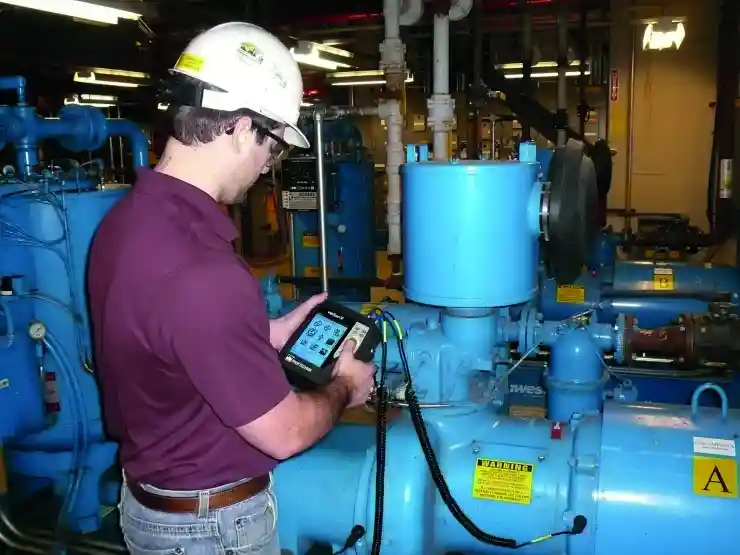
There are many industrial plants that possess equipment whose operation takes place in areas of high temperature and pressure, enclosed environments, or difficult access points. Manual vibration analysis involves the need for the technician to get near the machine as it operates, thus exposing him or her to possible hazards when conducting the inspection.
Remote monitoring reduces such unnecessary encounters by sending information about the machine to the maintenance personnel in the form of an interconnected monitoring system. The operator analyzes the health of the machine in the safety of the control room or even from distant locations. Reduced manual inspections mean reduced disruptions to production and more emphasis on higher risks associated with operations.
Supporting Predictive Equipment Maintenance
The process of predictive maintenance requires that proper information be provided about the condition of the machinery to establish whether maintenance is required rather than using set maintenance periods. Vibration tracking provides ongoing data about the performance of the equipment, thus assisting in spotting deterioration patterns.
Organizations that invest in remote machine vibration monitoring services gain deeper visibility into machine performance, allowing maintenance decisions to be based on measurable evidence rather than assumptions. Planned maintenance reduces emergency repairs, lowers the chance of catastrophic failures, and helps prevent incidents that could threaten employee safety. Better scheduling also improves resource allocation, reducing downtime while extending equipment lifespan through timely intervention.
Improving Emergency Response and Operational Decision-Making
Equipment breakdowns can sometimes necessitate decisions being made quickly and can have a bearing on both productivity and the safety of the workers involved. Continuous vibration tracking gives instant feedback when readings are beyond certain limits, enabling action to be taken before situations worsen.
Having access to vibration levels means that it becomes easy for the supervisor to decide whether the machine should continue its operations, undergo some intervention, or be shut down completely. This kind of information enhances coordination between various departments during incidents. Monitoring data is also instrumental in accident investigations since it enables the identification of historical performance trends of machines.
Building a Long-Term Safety Culture Through Data
In order to have a good safety culture in the workplace, it is important to make sure that there is proper decision-making based on information. Remote oscillation monitoring allows the collection of information about the behavior of the equipment over time. In this way, the company gets to see the historical data that shows patterns, vulnerabilities, and other aspects that allow for continuous improvement.
With such information, managers will be able to improve the approach towards maintenance and safety procedures, as well as investments that allow reducing risks. Employees become more confident that the equipment they work with is safe. Thus, when it comes to making decisions regarding safety, information provides a basis for proactive approaches to the issue.
Remote vibration analysis has become an important part of safety initiatives for businesses today. Through early detection of machine problems, decreasing workers’ exposure to dangerous situations, conducting preventative maintenance, making quicker decisions, and enhancing planning for safety in the future, this system allows organizations to avoid accidents before they happen. Organizations that implement continuous equipment monitoring ensure their work environment is safer and more productive in the long term.