ByJohn A
Best Hookah Bowls for Better Heat Management and Flavor
Getting a great hookah session is not just about the shisha. Every part has to work well together. One of the most important parts is the hookah bowl, even though many people overlook it.
The “best” bowl for heat control and flavor depends on its shape, its material, and how it works with your tobacco and charcoal (or an HMD). A good bowl can change your whole session: stronger flavor, smoother smoke, longer sessions, and fewer burnt hits. It helps your shisha heat evenly so it “cooks” instead of burning.
If you want to improve your setup, knowing these details makes a big difference. You can always buy hookah bowls online at Shisha Boutique Store to see many choices for different styles.
What Is a Hookah Bowl and Why Does It Matter for Heat Management and Flavor?
A hookah bowl is the “head” that sits on top of the hookah. This is where you put and pack your shisha tobacco (or flavored mix). The bowl is where heat meets the tobacco, so it plays a main role in how your session tastes and how long it lasts. After packing, the tobacco is covered with either aluminum foil (with small holes poked in it) or a heat management device (HMD). Then you place charcoal on top. The heat warms the bowl and the tobacco, which creates the smoke. That smoke goes down the stem, through the water, and then to you.
How Does a Hookah Bowl Work?
The idea is simple: hot coals sit above the shisha, and heat passes through the foil or HMD. That heat warms the tobacco and releases vapor and smoke. But the bowl’s design-especially the inside shape and where the holes are-decides how evenly the heat spreads. A well-made bowl helps the shisha heat evenly, giving you a smooth pull and better taste. If the heat is too high, the shisha burns and tastes harsh. If the heat is too low, you get weak smoke and dull flavor.
Why Is Heat Control Important for Flavor?
Heat control matters because it changes how the tobacco warms up and releases its flavor. Different tobaccos have different moisture levels, cuts, and heat needs. Good heat control helps the molasses and oils vaporize instead of burning. This gives a cleaner, clearer flavor. Steady heat also avoids “hot spots” that burn parts of the pack early, which often causes a burnt taste. Better heat control can also make the session last longer, with good flavor and thick smoke for more time.
Main Types of Hookah Bowls for Optimal Heat and Taste
Hookah bowls come in many styles. Each type has its own strengths, so knowing the basics helps you choose the right one.
Traditional Multi-Hole Bowls
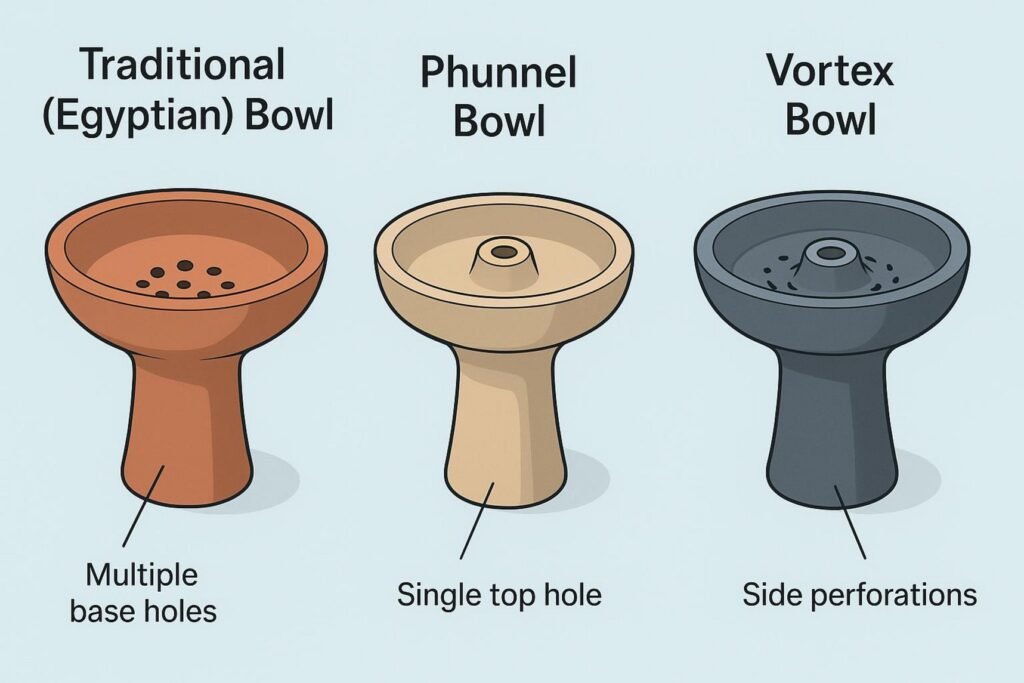
These are often called “Egyptian” bowls. They have several small holes at the bottom of the bowl. Most are made of clay, and they are simple and low-cost. Many hookah lounges use them, and they often come with new hookahs.
A downside is that with modern juicy shisha, the molasses can drip through the holes into the stem and base. This can reduce flavor and shorten the session. Because of that, traditional bowls usually work best with drier tobaccos like Al Fakher or Nu Tobacco, which do not leak as much.
Phunnel Bowls
Phunnel bowls are a popular modern design. They have a raised center “spire” with one larger hole at the top. This keeps the airflow hole above the tobacco, so juices stay in the bowl instead of dripping into the hookah. That usually means longer-lasting flavor and steady smoke.
Phunnels often feel more open (less restricted) than vortex bowls, and they work well with almost any tobacco-dry or very juicy. Many smokers choose phunnels because they consistently give strong flavor and good smoke output.
Vortex Bowls
Vortex bowls are similar to phunnels because they also have a raised center spire. The difference is the holes: instead of one hole on top, vortex bowls have 3-4 smaller holes on the side of the spire. This usually creates slightly tighter airflow than a phunnel.
Like phunnels, vortex bowls help keep juices from dripping into the hookah. Many people like the slightly more restricted draw, and they often get longer, more flavorful sessions than traditional bowls.
HMD-Compatible Bowls
As HMDs became more popular, some bowls started being made to fit them better. HMD-compatible bowls have a built-in rim (lip) that lets an HMD sit securely, like a Kaloud Lotus Plus.
You can place an HMD on other bowls too, but bowls made for HMDs usually feel easier and more stable to use. These bowls can come in different styles (traditional, phunnel, or vortex), so you can combine the bowl shape you like with the simple heat control of an HMD.
Specialty and Hybrid Bowls
There are also specialty and mixed-style bowls that combine features:
- Killer bowls: Often a mix of phunnel and traditional ideas, with holes placed higher to keep more juice while still giving good airflow.
- UPG bowls (Russian style): Thick walls for steady heat, with a classic multi-hole bottom. They often work well with medium-cut tobaccos.
- Inverted bowls: Can make thick smoke but may feel more restricted and can be harder to clean.
These designs give smokers more choices for heat control, flavor strength, and cloud size.
Materials Used in the Best Hookah Bowls
Bowl material is not just about looks. It affects how heat spreads, how long it holds heat, how easy it is to clean, and how the flavor comes through.
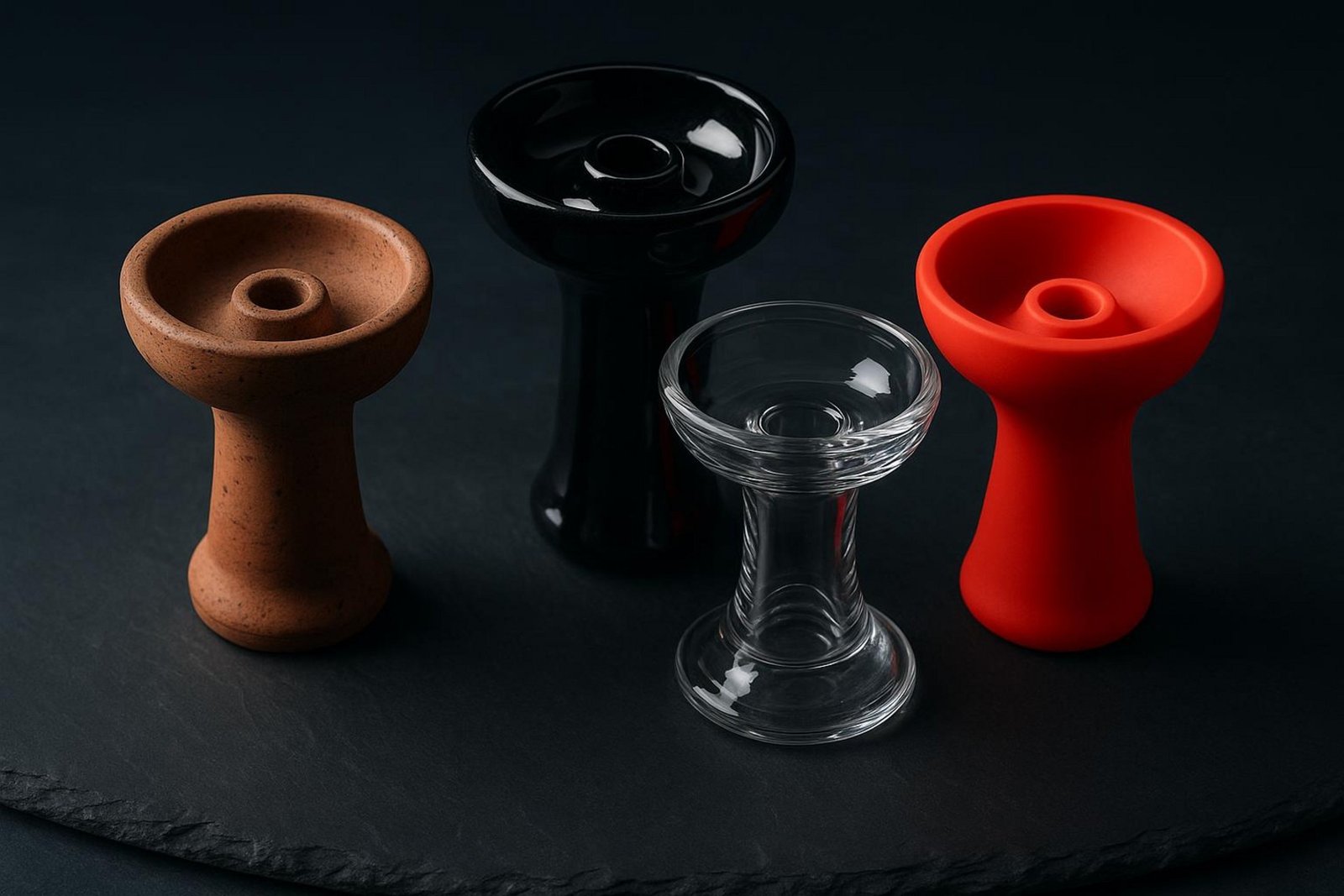
Clay Bowls: Heat Retention and Flavor Clarity
Clay is one of the most common and respected bowl materials. It spreads heat well and usually warms the tobacco evenly, which helps flavor stay steady. Many clay bowls are handmade, so small differences are normal.
Clay bowls can be:
- Glazed clay: Has a coating that stops juices from soaking into the bowl. This helps avoid leftover flavor from past sessions and makes cleaning easier.
- Unglazed clay: Soaks up juices over time. This can cause flavor mixing, but it can also work well if you use the bowl for one flavor only, since that flavor can get stronger over time.
Clay handles heat well, but it can crack if dropped or if it goes through sudden temperature changes. “American Clay” bowls are popular because they often hold and spread heat very well.
Ceramic Bowls: Durability and Heat Behavior
Ceramic bowls are also common. They are often thinner and lighter than many clay bowls, and they are usually cheaper because they are mass-produced. They come in many shapes and fit most hookahs.
Because they can be thinner, some ceramic bowls feel less tough than thick clay. Heat can be a bit less even too, which may cause uneven cooking in some cases. Still, many ceramic bowls give very good sessions and are a solid entry-level upgrade. Like clay, ceramic can crack from drops or sudden heat changes. Lower-quality ceramic may also hold onto flavors over time.
Glass Bowls: Clean Taste and Easy Cleaning
Glass bowls are less common because they can break easily and are harder to make. But they have a big advantage: glass does not soak up flavor. That means each session can taste very clean, without leftover flavor from past bowls. Glass bowls also look unique and can stand out in a setup.
The downside is heat. Glass usually does not spread heat as evenly as clay, and it can react badly to fast temperature changes. This can cause hot spots and burn the shisha if you are not careful with coal placement. Stronger glass types (like borosilicate glass, such as Kaloud Vitria) are known to be more durable than regular glass. Some glass bowls may also need adapters, especially for certain glass hookahs.
Silicone Bowls: Flexibility and Safety
Silicone bowls have become more popular because they are very hard to break. They are great for travel, parties, or anyone who drops things often. Silicone does not conduct heat well, which means you can handle it sooner after a session without burning your fingers.
But poor heat transfer can also mean the tobacco heats less evenly. Silicone can also hold onto flavors more than glazed clay or glass, which can lead to flavor mixing. Some modern designs use silicone with a metal or glass insert to improve heat spread and reduce flavor hold. Another helpful feature is fit: silicone bowls can form a tight seal on many inside-fitting hookahs without needing a grommet.
Aluminum and Hybrid Bowls: Heat Distribution
Aluminum bowls heat up fast and can reach high temperatures. This can be great for people who want very thick smoke, but it can also burn shisha faster if you are not careful, making sessions shorter. Aluminum also gets very hot, so you must let it cool before touching it. A big plus is durability: it usually survives drops easily.
Hybrid bowls mix materials to balance strengths. A common example is silicone plus a glass or metal insert. The goal is to keep silicone’s toughness while improving heat control and keeping flavor cleaner.
How Material Choice Affects Your Session
Here’s a quick way to think about it:
| Material | Main benefit | Main drawback |
| Clay | Even heat, steady sessions | Can break; unglazed can hold flavors |
| Ceramic | Affordable, many designs | Heat may be less even; can crack |
| Glass | Very clean flavor, easy to wash | Fragile; needs careful heat control |
| Silicone | Shatterproof, safer to handle | Can hold flavors; weaker heat spread |
| Aluminum | Fast, strong heat for big clouds | Easier to burn shisha; very hot to touch |
Picking the right material depends on what you care about most: pure flavor, long sessions, easy handling, or heavy heat.
Which Hookah Bowl Shapes Enhance Heat Management and Flavor?
Shape matters as much as material. Bowl geometry affects airflow, how heat spreads, how well juices stay in the bowl, and how your tobacco reacts.
Phunnel vs Traditional Bowl: Core Differences
The main difference is where the holes are.
- Traditional bowls have holes at the bottom, which can let juice drip into the hookah. They work best with drier tobaccos and can handle stronger heat.
- Phunnel bowls have a raised center and keep juice in the bowl. They are great for wetter tobaccos and often hold flavor longer.
Most of the time, your choice comes down to how juicy your tobacco is and how much heat it needs.
Impact of Bowl Depth and Diameter
Depth and width change how long a session lasts and how heat moves through the pack.
- Deeper bowls hold more tobacco, so sessions can last longer. They can also work well for dense packing.
- Shallow bowls use less tobacco and are good for shorter sessions or saving expensive blends.
Width also matters:
- Narrower/taller bowls can give smoother airflow and sometimes cooler smoke.
- Wider/shorter bowls can concentrate heat more, which may give thicker smoke.
Best Bowl Shapes for Juicy, Blonde, and Dark Leaf Tobaccos
Matching bowl shape to tobacco type helps a lot.
For juicy, blonde leaf tobaccos (Adalya, Fumari, Starbuzz, Al Fakher):
- Phunnel bowls are usually the best choice because they keep the juice inside the bowl.
- Examples mentioned: Hookain Lit Lip Phunnel, Hookain Lil Lip Phunnel, Oblako Flow Hookah Bowl.
- Silicone phunnels like the Cyril Silicone Cornetto can also work well because they are more forgiving with heat.
For dark leaf tobaccos (Tangiers, Trifecta Dark, MustHave, Black Burn):
- These often like more heat and denser packs.
- Traditional bowls or deep phunnels made from thick clay/stone are common picks.
- Examples mentioned: Kong Lava Bowl, Cyril Bowl Thor, Alpha Bowl RC.
For mixed styles (Trifecta Blonde, Zomo, Mazaya):
- Bowls that work with different packing methods are useful.
- Examples mentioned: Oblako Flow Hookah Bowl, Cyril Bowl X Series – Hispania.
How Bowl Size and Packing Affect Heat Management and Flavor
Material and shape matter, but so does how much tobacco you use and how you pack it.
Does Bowl Size Change the Smoking Session?
Yes. Bigger bowls (often 15-20g+) are good for longer sessions, especially with groups. Smaller bowls (around 8-12g) are good for solo sessions and saving shisha.
Size also affects:
- how many coals you need,
- how fast the bowl heats up,
- how well an HMD fits and performs.
Small bowls often heat faster and use fewer coals. Larger bowls need more heat to warm the full pack.
Packing Styles and Their Influence on Heat Control
Packing changes airflow and how heat moves through the tobacco.
- Fluffy pack: Sprinkle tobacco loosely with lots of air space. Great for blonde leaf in phunnels. Helps avoid burning and keeps airflow open.
- Dense pack: Press tobacco down firmly. Often used for dark leaf, which can handle more heat. Works well in traditional or deep phunnel bowls.
- Semi-dense pack: Between fluffy and dense. Works for many tobaccos and is common with HMD setups.
Your pack style affects how quickly flavor comes out, how thick the smoke is, and how long the session lasts.
Compatibility of Hookah Bowls with Heat Management Devices (HMDs)
HMDs changed how many people control heat, and they also changed how some bowls are built.
What Is an HMD and Why Use One?
A Heat Management Device (HMD) replaces foil. It is usually metal and has vents or openings to control heat. Devices like the Kaloud Lotus helped make HMDs popular over the last 5-10 years.
Benefits include:
- cleaner taste (no foil taste),
- easier heat control (open/close vents),
- fewer burnt hits,
- longer sessions,
- simpler setup and cleanup,
- often less charcoal used.
Which Bowls Work Best With HMDs?
Many HMDs can work on different bowls, but HMD-ready bowls have a rim that helps the HMD sit flat and stable.
Phunnel bowls are often used with HMDs because the raised spire helps prevent leaking and usually gives a good surface for the HMD. Brands like Kaloud also make bowls to match their devices (Kaloud Vitria II, Samsaris Kore Ceramic Hookah Bowl); at Shisha Boutique the Kaloud bowls and heat management devices are listed under the same brand section, which makes pairing them straightforward.
Traditional and vortex bowls can also work if they have the right rim. Using a bowl made for an HMD usually feels simpler and more consistent.
Aligning Hookah Bowls With Tobacco Types for Maximum Flavor
If you want the most flavor, match the bowl to the tobacco’s moisture level and heat needs.
Blonde Leaf Tobaccos: Ideal Bowl Choices
Blonde leaf tobaccos (Al Fakher, Fumari, Adalya, Starbuzz, Serbetli) are often wetter and more sensitive to heat. The goal is to keep the molasses in the bowl and avoid overheating.
Phunnel bowls are the common pick because they keep juices from dripping. Bowls like the Hookain Lil Lip Phunnel are made for good flavor with blonde leaf because they are shallower and heat up quickly. Silicone phunnels like the Cyril Silicone Cornetto also work well because they reduce the chance of overheating and are easy for new smokers.
Dark Leaf Tobaccos: Recommended Bowls for Strong Flavor
Dark leaf tobaccos (Tangiers, DarkSide, MustHave, Black Burn) are stronger and can take more heat. They are often packed dense and need steady, higher heat.
Deep traditional multi-hole bowls made from thick clay or stone are often used, since they handle heavy heat well and allow strong airflow. Examples mentioned include Kong Lava Bowl, Cyril Bowl Thor, and Alpha Bowl RC. These are made to handle higher temperatures without cracking or burning the tobacco too fast.
Mixed Packing and Versatility
Some tobaccos sit between blonde and dark leaf styles (Trifecta Blonde, Zomo, Mazaya). For these, flexible bowl designs help. Hybrid or adaptable airflow bowls like the Oblako Flow Hookah Bowl and Cyril Bowl X Series – Hispania can work with different packing methods. Matching the bowl to the tobacco makes it easier to get strong flavor without harshness.
Best Hookah Bowl Brands Known for Heat Management and Enhanced Taste
Many bowl brands focus on better heat control and stronger flavor. Here are some well-known names.
Cosmo Bowl
Cosmo Bowls come from the Russian hookah scene. They are multi-hole bowls that many fans enjoy. The brand wanted to build bowls that work well with Russian tobaccos. Before releasing their products, Cosmo Bowl tested and compared almost 50 multi-hole bowls from around the globe and reviewed what worked and what didn’t. Their “Shot” bowls are Turkish-style bowls with smaller capacity, and their “Killer” bowls are also made to use less tobacco. Cosmo Bowls use a milk-firing process that gives them a brown-to-black color and helps reduce flavor soaking (“bleeding”).
Oblako Bowls
Oblako is another popular Russian brand known for even heat spread and strong build quality. They make different styles, including phunnel and killer. Many smokers like Oblako for steady performance and long-lasting flavor. The Oblako Flow Hookah Bowl is often used with juicy blonde tobaccos like Adalya, since its airflow setup helps keep flavor strong and helps avoid sudden heat spikes.
Kong Bowls
Kong Bowls stand out for their unique glazes and thick clay build. Bowls like the Kong Lava Bowl are often used for higher-heat sessions, which makes them a good fit for dark leaf tobaccos. Their thick clay helps them handle heat well and supports longer, richer sessions.
Popular Global Brands
Other brands also make high-performing bowls:
- Hookain: Phunnel bowls like Lit Lip and Lil Lip, known for strong heat holding and clear flavor.
- Cyril Bowl: Thor (good for dense packing dark leaf) and Silicone Cornetto (easy, tough option for blonde leaf).
- HookahJohn: American Clay bowls known for strong heat holding and steady sessions.
- Kaloud: Known for HMDs, but also makes bowls like Vitria and Samsaris that pair well with their devices.
- Also gaining attention: Darkside Shot, ONMO Primis, Magellan Cassiopeia (porcelain), and Moze Epos V2, especially for smaller “economy” bowls that use less tobacco.
How to Choose the Best Hookah Bowl for Your Needs
There is no single best bowl for everyone. The right one depends on how you smoke, what tobacco you use, and what kind of sessions you like.
Session Length and Bowl Efficiency
Think about your usual session time:
- For long sessions with friends, a larger bowl (15-20g+) can be a better fit.
- For shorter solo sessions, smaller bowls (8-12g) can save tobacco.
“Economy” bowls like Hookain Low Load (around 8g) or Magellan Cassiopeia (8-10g) are made to give a full session with less tobacco, which helps when tobacco prices go up.
Flavor Retention and Easy Cleaning
If you switch flavors often and want clean taste each time, non-porous bowls are helpful:
- Glass bowls
- Glazed clay/ceramic/porcelain (example: Magellan Cassiopeia)
Unglazed clay and silicone can hold onto flavors more, so they may be better if you use one bowl for one flavor type, or if you don’t mind some leftover taste.
Bowl Longevity and Price Considerations
A better bowl can cost more upfront but last longer. Thick clay, stone, and aluminum often last longer than thin ceramic or glass. Prices vary a lot:
- basic Egyptian clay bowls can be around $1.99
- handmade premium bowls can go over $100
- many good bowls sit around $15-$30
A well-made bowl can last for years and can also help you waste less tobacco.
Matching Bowl to Smoking Preferences
Pick a bowl that matches your style:
- Want huge clouds? You may prefer bowls and materials that heat fast and hold strong heat.
- Want the cleanest flavor? Look at glass or glazed options.
- Smoke juicy blonde tobaccos often? Phunnels are usually the easiest choice.
- Smoke dark leaf often? Deep, thick clay bowls or strong heat-friendly designs can work better.
- Use an HMD? A bowl with the right rim makes things easier.
Trying different bowls and pack styles is how you learn what works best for you. Having more than one bowl lets you set up the right way for different tobaccos and different session goals.
Achieving Better Sessions: Pairing the Right Hookah Bowl with Effective Heat Management
Getting better hookah sessions comes from how your bowl and your heat control work together. A bowl alone won’t fix everything, and good coals alone won’t either. The bowl decides how heat enters, spreads, and stays. Your heat method-coal placement on foil or using an HMD-controls how that heat hits the tobacco during the session.
Small details can change a lot: the clay blend affects how the bowl holds heat, a phunnel spire keeps molasses from leaking, and bowl depth affects how much tobacco you can pack and how long it lasts. The best way to improve is to test things yourself. Use the same bowl with different packs. Or use the same tobacco with different bowls. Pay attention to smoke thickness, how the flavor changes over time, and how long the session lasts. Over time, you’ll find the setup that gives you smooth smoke and strong flavor without burning.
FAQs about Hookah Bowls, Heat Management, and Flavor
Are Hookah Bowls Universal?
No. Many bowls fit many hookahs, but not all bowls work with all setups. Some hookahs use special connections or sizes. For example, some glass hookahs like Lavoo use special glass bowls that may need an adapter to fit a standard hookah. Always check product details to confirm the bowl will fit tightly and make a good seal.
What Bowl Is Best for Beginners?
Phunnel bowls are often a good starting choice. They are easier to pack, keep the tobacco moist, and often give longer, smoother sessions. Silicone phunnel bowls are also a smart beginner pick because they are shatterproof, easier to handle when hot, and more forgiving with heat. Traditional bowls are cheap and common, but they can leak juice with many modern shishas.
Does Bowl Material Affect Flavor?
Yes. Glass and fully glazed ceramic/porcelain usually do not hold onto flavors, so each session tastes cleaner. Unglazed clay and some silicone bowls can hold flavors over time, so you may taste older flavors (“ghosting”). That can be bad if you switch flavors a lot, but it can be good if you keep one bowl for one flavor. Material also affects how the tobacco heats, which changes how flavor comes out.
Is Switching Bowls Worth the Cost?
Yes. A good bowl can greatly improve heat control, session length, and taste. Cheaper bowls may heat unevenly, break more easily, and hold onto flavors in a way that hurts taste. A quality bowl can last longer, help you use tobacco more efficiently, and make sessions more consistent.